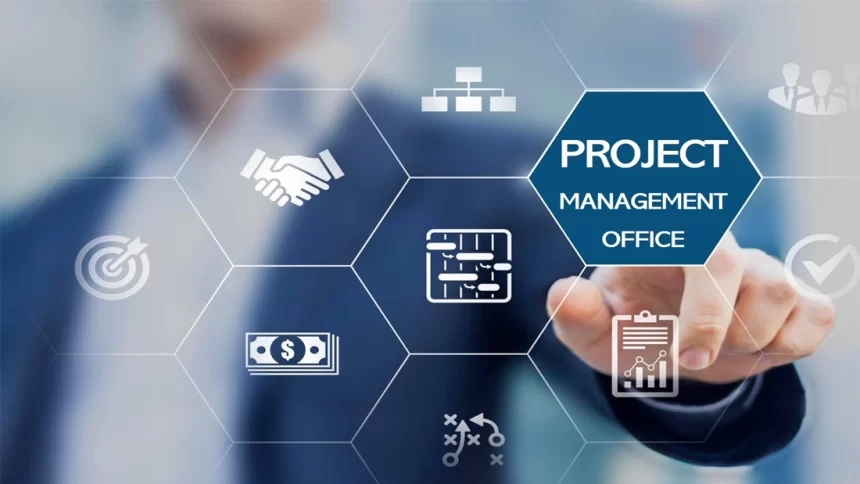
Not long ago, the Project Management Office — the PMO — was often viewed as a bureaucratic overhead: a team of administrators generating status reports that few people read. Today, that perception has been turned on its head. In organisations that are winning — delivering faster, adapting better, and scaling smarter — the PMO is not a back-office function. It is a strategic command centre.
From technology companies navigating digital transformation to government agencies redesigning public services, the PMO has become indispensable. But the offices driving real results look very different from their predecessors. They are leaner, more data-driven, and deeply aligned to the executive agenda. Understanding this evolution is essential for any leader who wants projects to deliver — and to matter.
“The organisations winning today are not just those with the best ideas — they are the ones who can execute those ideas consistently, at pace, and at scale. That is the PMO’s promise.”
What Is a PMO — And Why Has It Changed?
A Project Management Office is the function within an organisation responsible for defining and maintaining project management standards, processes, and governance. At its most basic, a PMO ensures that projects are planned consistently, risks are identified early, and stakeholders stay informed. But that is the floor, not the ceiling.
Three broad models have emerged in contemporary practice, each reflecting a different level of organisational maturity and ambition:
- Supportive PMO — Acts as a library and consultant, offering templates, best practices, and guidance on request. Low control; high flexibility.
- Controlling PMO — Requires compliance with specific methodologies and standards. Audits adherence to process across projects.
- Directive PMO — Takes direct ownership of projects, managing them end-to-end and assigning project managers from a central pool.
Increasingly, forward-thinking organisations are adopting a fourth model: the Strategic PMO. This version does not merely support delivery — it actively shapes which projects the organisation should pursue, ensures portfolio alignment to corporate strategy, and functions as a trusted advisor to the C-suite. The Strategic PMO speaks the language of value, not just velocity.
The Business Case for a Strong PMO
The evidence is compelling. Organisations with mature PMOs consistently outperform those without. Research from the Project Management Institute (PMI) has found that high-performing organisations — those that complete projects on time and on budget more than 80 percent of the time — are significantly more likely to have a mature PMO in place than their lower-performing counterparts.
The benefits span the entire project lifecycle:
- Reduced project failure rates through standardised risk management and early-warning governance mechanisms.
- Improved resource utilisation by providing a consolidated view of capacity across the portfolio.
- Better strategic alignment by filtering out low-value projects before they consume time, budget, or goodwill.
- Faster onboarding for project managers through shared frameworks, templates, and institutional knowledge.
- Enhanced executive confidence, giving leadership a real-time view of portfolio health and strategic delivery progress.
Crucially, the PMO’s value is not limited to individual project success. At the portfolio level, a well-functioning PMO prevents the silent killer of many organisations: project proliferation. When every department pursues its own initiatives without a central view, resources thin out, priorities clash, and nothing gets the attention it deserves.
The Future of the PMO
The PMO of tomorrow will look different again. Artificial intelligence is already beginning to reshape how portfolio data is analysed, how risks are modelled, and how resource decisions are made. PMO leaders who embrace these tools will find themselves better equipped than ever to guide their organisations through complexity.
At the same time, the human dimension of the PMO — the ability to navigate organisational politics, build trust with stakeholders, and inspire teams through adversity — will only become more valuable as technical tasks are automated. The future PMO leader is equal parts analyst, communicator, and strategist.
Sustainability and ESG considerations are also entering the PMO’s remit. As organisations are held accountable for the broader impact of their projects — on communities, on the environment, on supply chains — the PMO becomes the function best placed to embed responsible delivery standards across the portfolio.
A Final Word: The PMO as Competitive Advantage
There is a telling pattern in organisations that consistently outperform their peers: they treat delivery as a strategic capability, not an operational afterthought. They invest in the structures, talent, and tools that allow good ideas to become real outcomes — reliably, repeatedly, and at scale.
The PMO, at its best, is the engine of that capability. It is the function that turns strategy from aspiration into achievement. For any organisation serious about what it builds next, the question is not whether to invest in a PMO. It is how to build one that truly leads.